

It Starts with What You’re Eating….But Not Just How Much
GLP-1 medications reduce appetite. That’s part of how they work. But when the appetite drops, many people unintentionally shift how they eat in ways that slow their metabolism.
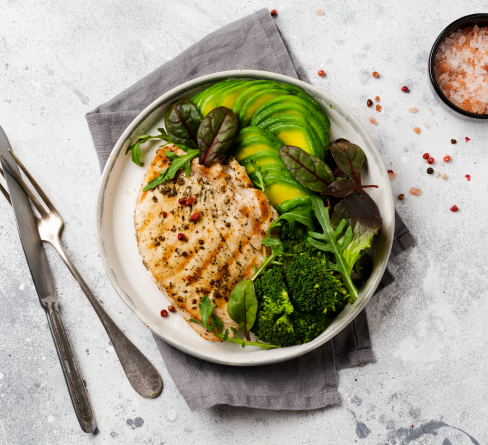
The most common pattern we see is low protein intake combined with higher fat or carbohydrate intake. Protein is harder to prioritize when you’re not very hungry, and fats are easy to consume in small amounts, things like nuts, cheese, oils, crackers, chips, and dressings.
This matters more than most people realize.
Protein is what helps preserve your muscle. And muscle is what drives your metabolism. When protein intake is too low, the body begins to break down muscle along with fat. Over time, this reduces your resting metabolic rate, meaning your body burns fewer calories, even at rest.
At the same time, fat is very calorie-dense. So even if portions feel small, intake may still be higher than expected without providing the metabolic support your body needs.
So the goal is eating in a way that supports your metabolism.

Your Cells Have to Turn Food Into Energy
Weight loss doesn’t happen just because you eat less.
It happens when your body can efficiently convert what you eat into usable energy.
That process takes place inside your cells, in structures called mitochondria. Within those mitochondria is a pathway known as the Krebs cycle, which is responsible for converting nutrients into energy your body can actually use.
When this system is working well, your body is able to burn both glucose and fat efficiently.
But when it’s slowed down, due to low muscle mass, low activity, poor nutrient status, or chronic stress, your ability to produce energy drops. Instead of burning fuel efficiently, your body becomes more conservative. It holds onto energy rather than using it. This is one of the most overlooked reasons people plateau.

Muscle and Movement Drive Your Metabolism
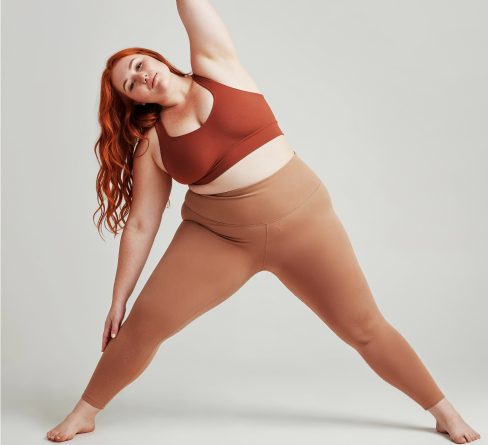
Muscle is your metabolic engine. It’s the primary place where your body uses glucose and burns energy. The more muscle you have, the more efficiently your body can process and utilize fuel.
When muscle mass decreases or when activity levels are low, your body’s demand for energy drops. Glucose isn’t cleared as effectively from the bloodstream, and fat loss becomes more difficult. This is why strength training and daily movement matter so much, especially when you’re on a GLP-1. These signals tell your body that energy is needed. Without them, your body adapts in the opposite direction. Even simple changes, like walking more or incorporating resistance training, can significantly improve how your body handles energy.

Your Gut Plays a Bigger Role Than You Think
GLP-1 medications slow digestion. That’s part of their mechanism.
But if you already have underlying gut issues, like constipation, bloating, or imbalances in your gut microbiome, that slowdown can become amplified.
Now the body is operating in a low-motility, low-clearance state.
When your gut isn’t functioning well:
- Nutrient absorption may be reduced
- Inflammation can increase
- Detox pathways may become sluggish
All of this sends signals to the body that it’s not an ideal time to release stored energy. Instead of burning fat, the body becomes more protective. So even if you’re eating well, your body may not be receiving or using those nutrients effectively.

Hormones Can Shift the Entire Equation
Even when nutrition, movement, and gut health are addressed, hormones can still influence how your body responds.
Cortisol, your primary stress hormone, is a major player. When cortisol remains elevated over time, it increases blood sugar levels and promotes insulin release. Insulin, in turn, encourages the body to store fat rather than burn it. Cortisol also breaks down muscle, which further slows metabolism. At the same time, many women experience hormonal shifts during perimenopause and menopause.
As estrogen levels decline:
- Insulin sensitivity decreases
- Fat distribution shifts toward the abdomen
- The body becomes more likely to store fat centrally
This is why many women feel like their body has “changed overnight,” even when their habits haven’t. The internal environment has shifted, and the body responds accordingly.
Bringing It All Together
When weight loss stalls on a GLP-1, it’s usually not one single issue. It’s a combination of factors working together:
Low protein intake can lead to muscle loss and a slower metabolism.
Reduced activity lowers your body’s demand for energy.
Slowed cellular energy production makes it harder to burn fuel efficiently.
Gut dysfunction affects absorption and increases inflammation.
Hormonal shifts signal the body to store rather than release fat.
So while it may feel like your body isn’t responding, it’s actually adapting.
A Better Approach to Weight Loss
At Juve, we don’t just focus on eating less. We will help you focus on helping your body work the way it’s designed to.
That means:
- Supporting muscle and metabolism
- Improving how your body processes energy
- Addressing gut health and digestion
- Understanding and working with your hormones
- Supporting basic nutrient demands
When all systems are supported, your body doesn’t have to fight fat loss anymore. It knows it’s safe to release it.